
Original language: Polski
Recipe Rating
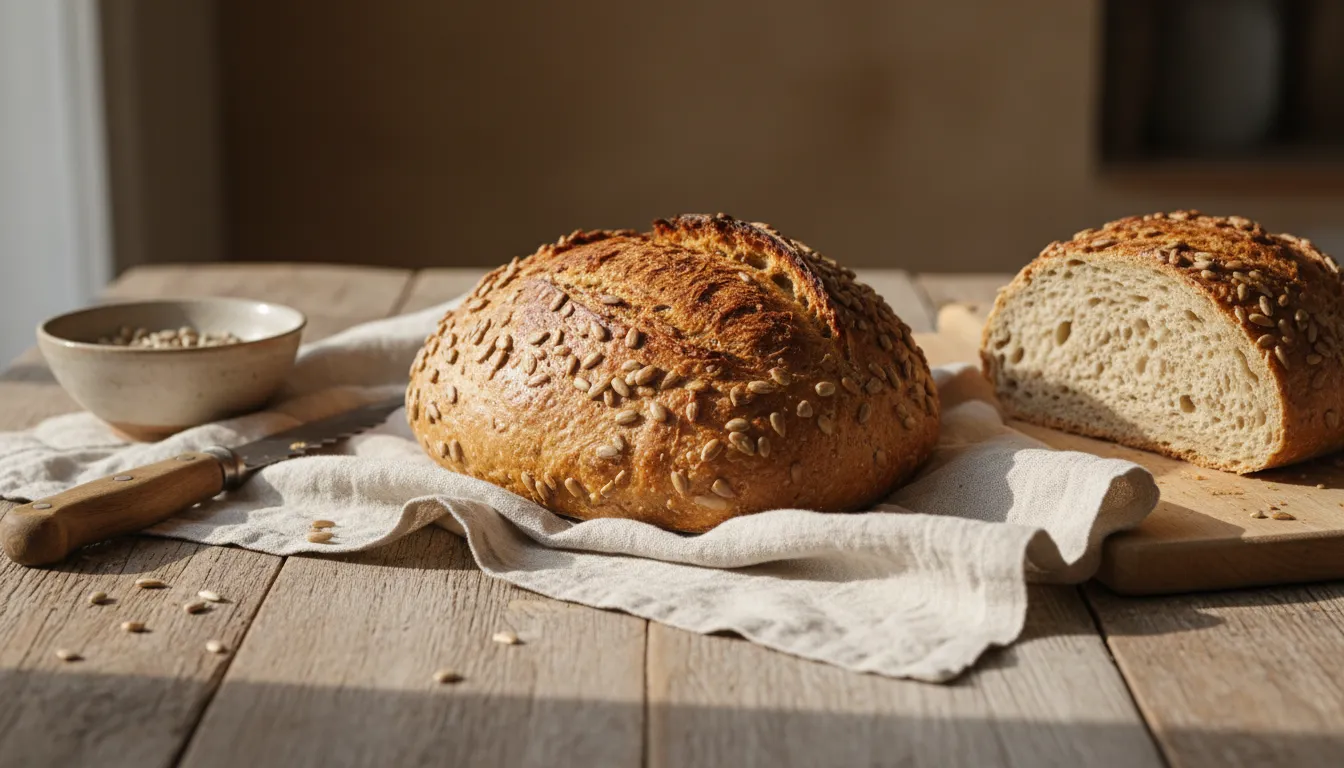
Rye-Wheat Bread with Sunflower Seeds on Sourdough Starter
This homemade sourdough bread combines the flavors of rye and wheat, with the addition of sunflower seeds. A long fermentation process gives it a unique depth of flavor and aroma. The crust is crispy, and the crumb is moist and full of flavor.
Ingredients
- 150gactive rye sourdough starter (100% hydration)
- 250grye flour, type 720
- 250gwheat flour, type 650
- 300mlwarm water (approximately 35°C)
- 10gsea salt
- 50gsunflower seeds
- flour for dusting
Instructions
- The evening before baking, refresh the sourdough starter so that it is active and full of bubbles in the morning. You can do this by mixing 50g of starter with 50g of rye flour and 50ml of water, then leaving it at room temperature for about 8-12 hours.
- In the morning, in a large bowl, combine the active rye sourdough starter, rye flour, wheat flour, and 250 ml of warm water. Mix everything with a spoon or by hand until the ingredients are combined and a loose, sticky dough forms. Do not knead too intensely. Cover the bowl with plastic wrap or a cloth and let it autolyze for 30 minutes at room temperature. Autolyzing will allow the flour to absorb the water and develop gluten.
- After autolysing, add the salt and the remaining 50 ml of warm water. Knead the dough for about 10-15 minutes until it becomes more elastic and smooth. You can do this by hand or with a stand mixer with a dough hook. The dough should still be quite sticky. Towards the end of kneading, add the sunflower seeds and gently press them into the dough.
- Transfer the dough to a lightly oiled bowl. Perform a series of stretch and folds every 30 minutes for the first 2 hours of fermentation. This involves gently stretching a piece of dough and folding it into the center, rotating the bowl until you have folded the entire dough. Repeat 3-4 times. This will help build gluten structure. After the last fold, cover the bowl and let the dough ferment at room temperature for about 3-4 hours, or until it has doubled in volume and is full of air bubbles.
- Gently turn the dough out onto a lightly floured surface. Shape it into a loaf, gently folding the dough to create surface tension. You can shape a round loaf (boule) or an oblong loaf (batard).
- Transfer the shaped loaf to a proofing basket (banneton) generously dusted with flour (preferably rice flour to prevent sticking), seam side up. Cover and place in the refrigerator for 8-16 hours (known as a cold fermentation). Cold fermentation deepens the flavor and makes shaping easier.
- Preheat your oven to 250°C with a Dutch oven (or a similar lidded pot) inside. Heat for at least 30-40 minutes, so the pot is very hot.
- Carefully remove the hot pot from the oven. Gently transfer the loaf from the basket into the pot (seam side down). You can score the top of the bread with a sharp knife or razor blade to control the expansion during baking. Cover the pot and place in the oven.
- Bake the bread covered for 30 minutes at 250°C. After 30 minutes, remove the lid, reduce the temperature to 220°C, and bake for another 20-25 minutes, until the crust is golden brown and crispy. The interior of the bread should reach a temperature of about 96-99°C.
- Remove the bread from the pot and transfer it to a wire rack to cool completely before slicing. This is very important to allow the crumb to set and prevent it from being gummy. Slice and enjoy your homemade, aromatic bread!